Women leading fleet safety: From booking agent to running operations
June 19, 2026
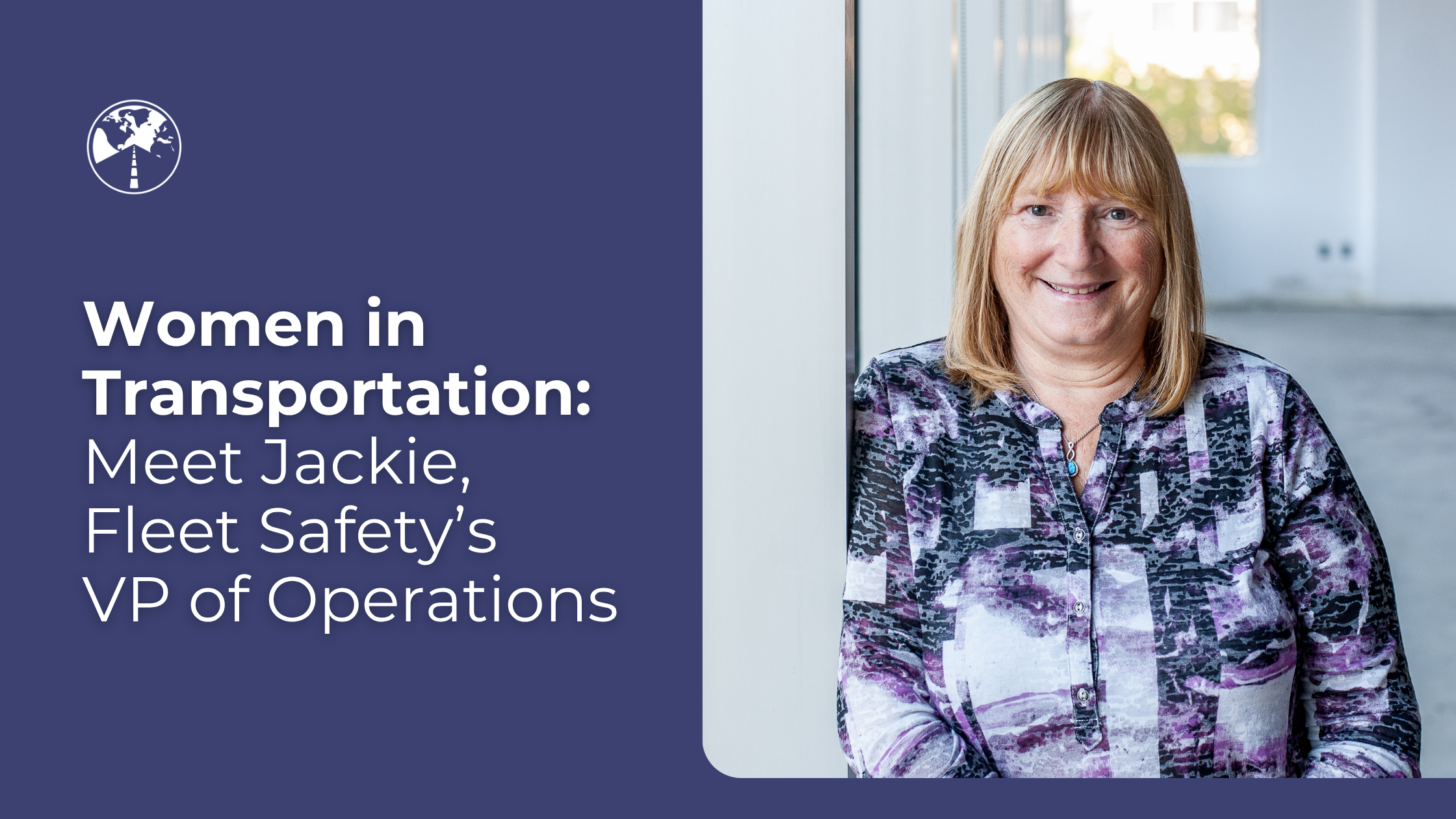
From booking agent to VP: how Jackie built her career in transportation
Jackie started her career about 20 years ago as a booking agent, building a strong foundation in customer service and logistics coordination. Over time, she moved into operations, taking on roles with increasing responsibility across staffing, performance, safety, and efficiency. That progression gave her something rare: a deep understanding of both frontline challenges and the strategic planning needed to address them.
Today, as VP of Operations, she oversees the entire operation at FSI and works across a wide range of driving environments, including new and experienced drivers, light-duty and commercial fleet clients, contractor-based and seasonal operations.
"What this has shown me is that risk profiles and safety needs vary significantly across those groups," she explains. "A big part of my role has been aligning safety programs and expectations to those different environments while maintaining consistent standards across the organization."
The compliance trap: why "checked the box" isn't the same as safe
One of the most important distinctions Jackie makes is between compliance and actual risk reduction. It is a misconception that costs organizations more than they realize.
"One of the biggest misunderstandings is assuming that compliance automatically equals safety," she says. "Organizations often focus on meeting regulatory requirements — documentation, certifications, policy sign-offs — but those don't always translate into actual behavior change on the road."
She has seen organizations that are fully compliant on paper but still experience preventable incidents because they are not actively measuring or coaching driver behavior. According to Transport Canada, human behavior is a contributing factor in the vast majority of road collisions, which means documentation alone will never be enough.
Real risk reduction, Jackie argues, comes from what drivers do day to day: how they react to conditions, manage fatigue, and handle distractions. "The shift happens when companies move from a compliance mindset to a performance and safety culture," she says, "using data, coaching, and consistent engagement to actually reduce risk."
What "we need fleet safety" actually means on Monday morning
When an operations leader says they need fleet safety, Jackie translates that into five concrete changes that need to happen immediately, not next quarter.
- Visibility: Clear data on incidents, near misses, speeding, and braking habits, so teams are tracking leading indicators, not just reacting to lagging ones.
- Accountability: Safety becomes part of every supervisor's role, not just a compliance function. That means regular check-ins and documented follow-up.
- A coaching cadence: Instead of one-time training, ongoing and targeted coaching based on actual driver behavior.
- Communication: Safety shows up in daily or weekly meetings and discussions, treated like any other performance metric.
- Consistency: Expectations are reinforced across the board, for employees, contractors, new hires, and experienced drivers alike.
"Operationally, it's about embedding safety into routines, metrics, and leadership expectations," Jackie says. FSI's in-person training programs are built with exactly that philosophy in mind, pairing structured course content with real-world application.
What drivers are really thinking when they walk into training
Understanding what a driver brings into the room is one of Jackie's strengths. In her experience, learners typically arrive with one of a few concerns: they feel they are being judged, they are worried about consequences, or they believe they do not need the training because they have been driving for years.
"I remind everyone that this isn't about checking a box," she says. "It's about protecting them, their livelihood, and everyone on the road. We have all gained bad driving habits over the years."
That framing lowers defensiveness without lowering the standard. From there, FSI focuses on making training practical and relevant, using real-world scenarios tied to the risks drivers actually face. The standard remains clear throughout: safe driving is a requirement, not a suggestion.
It is an approach reflected directly in FSI's Defensive Driving Course for demerit reduction in Alberta, which uses the SAFER system and scenario-based content to shift driver thinking, not just driver knowledge. For commercial operators, the Professional Driver Improvement Course takes the same approach with a focus on the added complexity of fleet and commercial environments.
What strong driver onboarding actually looks like in the first 30 to 60 days
Most organizations front-load information during onboarding and then move on. Jackie insists on something different.
In the first 30 to 60 days, she requires:
- An early baseline assessment — not just licensing and paperwork, but a real evaluation of driving habits and risk areas, including a personal driver evaluation for instructors
- Monitoring from day one through ride-alongs, classroom observation, or structured check-ins to identify leading indicators early
- Scheduled coaching meetings, rather than waiting for an incident or a formal review to address expectations
- Clear performance expectations, so drivers know exactly what "good" looks like across safety, behavior, and consequences
- Documented sign-off at milestones at 30 and 60 days, confirming competence rather than assuming it
"That early window is where habits are formed or corrected, and expectations are confirmed," Jackie says. Research from the National Safety Council supports this, consistently showing that early intervention and structured coaching significantly reduce long-term incident rates.
Why near-miss reporting is really a trust problem
Near-miss reporting is one of the most underused tools in fleet safety, and Jackie is direct about why.
"If drivers think reporting will lead to blame, or that it won't make a difference, they won't do it," she says. "You don't get honest reporting by asking for it. You get it by how you respond when it happens."
What she has seen work is leadership consistency: responding to reports constructively, not punitively, and visibly acting on trends. Frontline leaders play the biggest role. When they treat near misses as learning opportunities instead of failures, reporting increases quickly.
This is not a new insight, but it remains one of the most consistently overlooked elements of safety culture. The Campbell Institute at NSC has documented repeatedly that organizations with strong near-miss reporting cultures show significantly lower injury and incident rates over time.
The one behavior that reduces risk across almost any fleet
When asked to name the single behavior she would bet on to reduce risk across any fleet, Jackie did not hesitate: active hazard awareness.
"Most incidents, whether it's distraction, speeding, or poor decisions, come down to drivers reacting instead of anticipating early," she explains. "If a driver is actively scanning, maintaining space, and thinking a few steps ahead, a lot of other risks are naturally reduced."
It is a principle that sits at the core of defensive driving instruction and the kind of outcome that good training reinforces over time.
Women in transportation: progress made, work still ahead
Jackie closed the conversation with something she wanted to say directly: the transportation industry has made progress on representation, but there is still meaningful work to do, especially in creating clear pathways for women into leadership and operations roles.
"It's not just about recruitment," she says. "It's about retention and development. That means creating environments where women are supported, heard, and given opportunities to grow into decision-making roles."
Her own path from booking agent to VP is a strong example of what that can look like, and it is the kind of story the industry needs more of.
As part of International Women's Day, Fleet Safety International is proud to spotlight the expertise and leadership that Jackie brings to driver safety every day. Whether you are a safety manager, fleet trainer, or individual driver, our team is here to help you move from compliance to real, lasting safety culture. Explore our full course offerings or reach out to us at sales@fleetsafetyinternational.com to talk about what the right program looks like for your team.
Interested in our courses?
Browse the catalogue and find the training that fits you or your team.
View courses